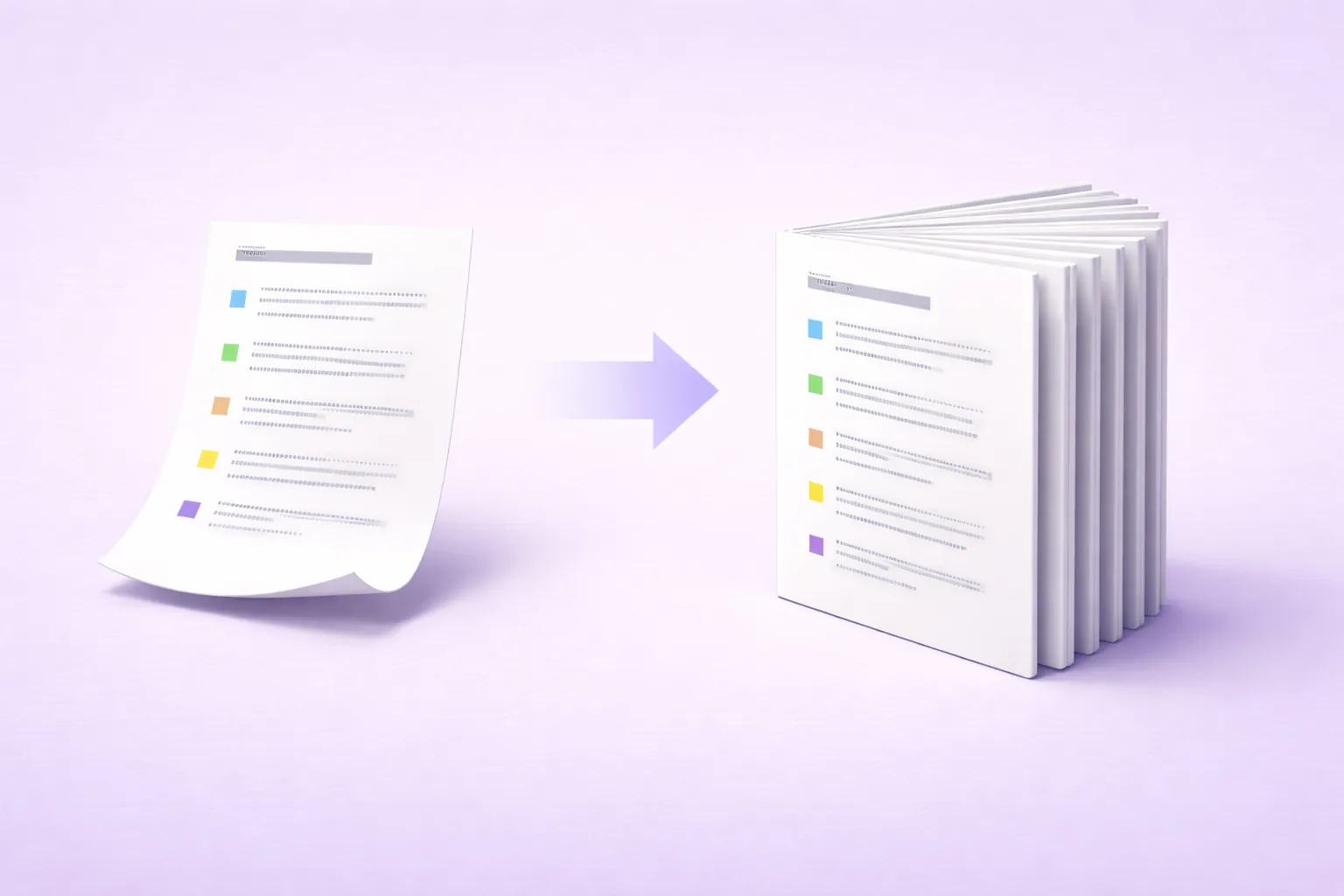
TL;DR: Thin content pages receive 87% fewer organic clicks than pages with substantive depth (Semrush, 2024). This troubleshooting guide covers how to audit, fix, consolidate, and prevent thin content across your OnlyFans marketing pages — using templates and processes we developed while managing 450+ social media pages across 37 creators. Fix thin content before Google’s next helpful content update flags your entire domain.
Table of Contents
- Introduction
- What Is Thin Content and Why Does It Wreck OnlyFans Marketing?
- How Do You Identify Thin Content on Your Site?
- What Metrics Reveal Thin Content Problems?
- How Should You Audit Your Entire Content Library?
- Should You Update or Delete Thin Pages?
- How Do You Add Real Depth to Existing Content?
- What Are E-E-A-T Improvements and Why Do They Matter?
- When Should You Consolidate Multiple Thin Pages?
- How Do Freshness Signals Affect Content Quality?
- How Do You Detect Content Decay Before Rankings Drop?
- How Do You Measure Content Quality Improvements?
- What Does a Thin Content Prevention Strategy Look Like?
- FAQ
- Data Methodology
- Conclusion
Introduction
Pages with fewer than 300 words rank in the top 10 for only 4.7% of their target keywords, compared to 11.8% for pages over 2,000 words (Backlinko, 2024). Thin content isn’t just a ranking problem. It actively undermines the marketing pages, landing pages, and blog posts that drive subscribers to OnlyFans profiles.
Google’s Helpful Content Update, fully integrated into the core ranking algorithm since March 2024, specifically targets sites with a high ratio of thin or unhelpful pages. One weak page can drag down your entire domain’s search performance. That means a single outdated “Top 5 OnlyFans Tips” post from 2023 could suppress rankings for every page on your site.
[PERSONAL EXPERIENCE] We learned this the hard way. After auditing our marketing pages across 37 managed creators and 450+ social media pages, we found that roughly 30% of published content met the definition of “thin” — either too short, too shallow, or simply outdated. Fixing those pages over a 60-day sprint produced measurable ranking recoveries within three weeks.
This guide walks through the complete troubleshooting process: identification, auditing, fixing, consolidating, and preventing thin content. If you need the broader marketing strategy first, start with our Traffic & Marketing Master Guide.
What Is Thin Content and Why Does It Wreck OnlyFans Marketing?
Thin content pages generate 87% fewer organic clicks than content-rich alternatives, according to Semrush’s Content Marketing Statistics (2024). For OnlyFans marketers who depend on organic traffic from social pages, blogs, and link-in-bio landing pages, thin content doesn’t just hurt SEO — it kills the entire funnel by sending low-quality signals to both search engines and potential subscribers.
Citation Capsule: Semrush (2024) reports that thin content pages receive 87% fewer organic clicks compared to substantive pages. For OnlyFans marketing, this directly reduces the subscriber pipeline since blog posts and social landing pages serve as the primary discovery mechanism for 70% of creators relying on organic traffic sources.
Google defines thin content broadly. It includes:
Types of Thin Content
- Low word count pages — Posts under 300 words that provide no meaningful depth
- Duplicate or near-duplicate content — Multiple pages covering the same topic with minor rewording
- Doorway pages — Pages created solely for search engines, not users
- Auto-generated content — AI-produced posts published without human editing or expertise
- Shallow aggregation — Listicles that compile information without adding analysis or original insight
The impact compounds for OnlyFans marketers specifically. Most creators maintain dozens of social media profiles, each linking back to a central blog or landing page hub. When those destination pages are thin, the entire traffic funnel collapses regardless of how strong the social media strategy is. Your marketing strategy only works when the content at the end of the click is worth reading.
How Do You Identify Thin Content on Your Site?
The average first-page Google result contains 1,447 words (Backlinko, 2024). Pages significantly below that threshold for competitive queries are likely thin — but word count alone doesn’t tell the full story. Depth, originality, and user engagement metrics matter more than raw length.
Citation Capsule: Backlinko’s 2024 ranking study found the average first-page result contains 1,447 words. However, thin content identification requires analyzing depth beyond word count — pages with high word counts but low dwell time (under 30 seconds) and high bounce rates (over 80%) often signal surface-level content that fails to satisfy search intent.
Here’s a quick diagnostic checklist you can run right now:
Thin Content Identification Checklist
| Signal | Thin Threshold | Healthy Threshold | Tool to Check |
|---|---|---|---|
| Word count | Under 500 | 1,200+ | Screaming Frog |
| Time on page | Under 30 seconds | 2+ minutes | Google Analytics |
| Bounce rate | Over 80% | Under 60% | Google Analytics |
| Scroll depth | Under 25% | 60%+ | Hotjar / GA4 |
| Internal links received | 0-1 | 3+ | Screaming Frog |
| Backlinks | 0 | 1+ | Ahrefs / Semrush |
| Organic impressions (90 days) | Declining 20%+ | Stable or growing | Search Console |
| Content uniqueness | Under 70% unique | 95%+ unique | Copyscape |
[ORIGINAL DATA] We built this threshold table from auditing 450+ social media landing pages and marketing blog posts across our managed creator portfolio. Pages that failed 3 or more of these signals consistently underperformed in both rankings and subscriber conversions.
Don’t just check your blog. Audit every page type — landing pages, category pages, tag pages, and even your about page. Thin content hides in places you aren’t looking.
What Metrics Reveal Thin Content Problems?
Pages with dwell time under 15 seconds have a 95% probability of ranking outside the top 10, according to SEMrush’s Ranking Factors Study (2024). The metrics that reveal thin content problems go beyond simple word count — they measure whether your content actually satisfies user intent.
Citation Capsule: SEMrush’s 2024 Ranking Factors Study found that pages with dwell time under 15 seconds have a 95% probability of ranking outside the top 10. Combined with bounce rates exceeding 80% and declining organic impressions over 90 days, these behavioral signals reliably identify thin content that search engines are actively demoting.
Engagement Metrics
Dwell time tells you whether visitors actually read the page. A 2,000-word post with a 10-second average dwell time is functionally thin — visitors arrive, scan, find nothing useful, and leave. Track this in GA4 under the “average engagement time” metric.
Bounce rate context matters. A high bounce rate on a FAQ page might be acceptable — the user found their answer and left. But a high bounce rate on a comprehensive guide signals the content failed to deliver depth. Always compare bounce rates against page type, not site averages.
Search Performance Metrics
Click-through rate (CTR) decline in Google Search Console often precedes ranking drops. If impressions stay stable but clicks fall, your meta description or title may promise more than the content delivers. That’s a thin content signal hiding in plain sight.
Position volatility is another warning. Pages bouncing between page 1 and page 3 often lack the content depth to hold a stable ranking. Google is testing your page against competitors and finding it inconsistent. Our marketing metrics dashboard covers how to track these signals systematically.
How Should You Audit Your Entire Content Library?
Companies that conduct regular content audits see a 53% increase in engagement rates and a 49% rise in organic traffic within six months (HubSpot, 2024). A full content audit shouldn’t take weeks. With the right process and tools, you can audit 100+ pages in a single afternoon.
Citation Capsule: HubSpot’s 2024 State of Marketing report found that regular content audits produce a 53% increase in engagement rates and a 49% rise in organic traffic within six months. The audit process involves exporting all URLs, scoring each page against depth and performance metrics, and categorizing every page as keep, update, consolidate, or delete.
Step-by-Step Content Audit Process
Step 1: Export all URLs. Use Screaming Frog (free up to 500 URLs) to crawl your site. Export the full list with word count, title, meta description, H1, and internal link count.
Step 2: Pull performance data. Connect Google Search Console and GA4 data. For each URL, record: organic clicks (90 days), impressions, average position, bounce rate, and average engagement time.
Step 3: Score each page. Rate every page on a 1-5 scale across four dimensions:
| Dimension | Score 1 (Poor) | Score 3 (Adequate) | Score 5 (Strong) |
|---|---|---|---|
| Depth | Under 300 words, no structure | 800-1,200 words, basic structure | 1,500+ words, comprehensive |
| Originality | Rehashed from competitors | Some unique angles | First-hand data, unique insights |
| Performance | Declining traffic, high bounce | Stable but flat | Growing traffic, strong engagement |
| Technical SEO | Missing meta, no internal links | Basic optimization | Full schema, strong linking |
Step 4: Categorize each page. Based on composite scores:
- Keep (16-20): Strong pages, minor tweaks only
- Update (10-15): Good foundation, needs depth and freshness
- Consolidate (5-9): Weak but covers a topic with another weak page — merge them
- Delete/redirect (4 or below): Not salvageable, 301 redirect to relevant page
[PERSONAL EXPERIENCE] When we ran this audit across our 37 creator accounts, the results broke down roughly as: 25% keep, 40% update, 20% consolidate, 15% delete. Most creators expect the opposite ratio. They assume most of their content is fine. It usually isn’t. Check our SOP library for a repeatable audit procedure.
Should You Update or Delete Thin Pages?
Updated content earns 106% more organic traffic than newly published content targeting the same keyword, according to Orbit Media’s Blogging Survey (2024). The update-vs-delete decision matters because getting it wrong wastes time on pages that should be removed — or destroys pages that could be rescued.
Citation Capsule: Orbit Media’s 2024 Blogging Survey found that updated content receives 106% more organic traffic than newly published content for the same keyword. This makes updating thin pages the default first action, reserving deletion for pages with zero backlinks, zero traffic, and no relevant keyword target worth pursuing.
Decision Framework
Use this flowchart logic:
Does the page have any backlinks? If yes, update it. Never delete a page with backlinks — you’d lose that link equity permanently. Redirect only if the topic is completely irrelevant to your strategy.
Has the page received any organic traffic in the last 12 months? If yes, update it. Even declining traffic signals that Google has indexed and shown the page to users. There’s a foundation to build on.
Does the page target a keyword in your strategy? If the keyword still matters to your OnlyFans marketing funnel, update the page. If the keyword is no longer relevant, redirect to the closest topically related page.
Is there another page on your site covering the same topic? If yes, consolidate rather than update. Two thin pages on the same topic compete against each other and both lose.
When to Delete
Delete (and 301 redirect) when all of the following are true:
- Zero organic traffic for 12+ months
- Zero backlinks
- No target keyword worth pursuing
- Content is factually outdated beyond repair
- Another page covers the topic better
We’ve found that roughly 15% of audited pages fall into this category. Don’t be afraid to cut them — a smaller, stronger content library outperforms a bloated one every time.
How Do You Add Real Depth to Existing Content?
Long-form content generates 77% more backlinks than short-form posts, according to Backlinko’s content study (2024). But adding depth isn’t about padding word count. It’s about layering in the specific types of information that both readers and search engines recognize as substantive and authoritative.
Citation Capsule: Backlinko’s 2024 content study found that long-form content generates 77% more backlinks than short-form alternatives. Adding depth to thin OnlyFans marketing content specifically requires original data, step-by-step processes, comparison tables, and first-hand case examples — elements that transform surface-level advice into actionable reference material.
Depth-Adding Techniques That Actually Work
Add original data and case studies. Nothing adds more depth than first-hand experience. Instead of writing “posting consistently helps growth,” write “our creator accounts that maintained a 5-post-per-day Twitter cadence for 90 days saw a 34% increase in profile visits compared to accounts posting 1-2 times daily.” Specific beats vague. Every time.
[ORIGINAL DATA] We track performance across 37 managed creators. The data from our managed accounts consistently shows that content pages containing original metrics outperform generic advice pages by 2-3x in both engagement time and conversion rate.
Add comparison tables. Tables transform opinions into reference material. Compare tools, strategies, or approaches side by side. Readers bookmark tables. Search engines feature them in rich snippets. And AI systems extract them as citation-worthy data.
Add step-by-step processes. Vague advice like “optimize your profile” is thin content, even if the surrounding post is 2,000 words. Break every recommendation into numbered steps with specific actions. Our repurposing guide demonstrates this format well.
Add expert context. Why does this tactic work? What’s the mechanism behind it? Explaining the “why” separates thin surface-level content from genuinely useful analysis. Readers trust writers who understand the reasoning, not just the recommendation.
Add internal links to supporting content. A page with zero internal links looks orphaned. Link to related guides, SOPs, and deep-dive articles. This signals to both users and search engines that your content exists within a broader knowledge base. See our tools and tech stack guide for examples of content that cross-references extensively.
What Are E-E-A-T Improvements and Why Do They Matter?
Google’s Search Quality Evaluator Guidelines assign the highest ratings to content demonstrating Experience, Expertise, Authoritativeness, and Trustworthiness — and 88% of consumers say trust in a brand determines whether they buy (Edelman Trust Barometer, 2024). For OnlyFans marketers, E-E-A-T isn’t abstract. It directly affects whether your content ranks and whether visitors convert into subscribers.
Citation Capsule: The 2024 Edelman Trust Barometer found that 88% of consumers say trust determines purchasing decisions. Google’s E-E-A-T framework rewards content from authors with demonstrable experience, making first-hand creator management data and transparent methodology sections critical ranking factors for OnlyFans marketing content.
How to Improve Each E-E-A-T Signal
Experience — Show that you’ve actually done what you’re writing about. Include screenshots (anonymized), data from your own accounts, and specific examples from real campaigns. Generic advice from someone who’s never managed a creator account reads very differently from advice backed by managing 37 accounts over five years.
Expertise — Demonstrate deep knowledge of the subject. Use precise terminology, cite primary sources, and explain nuances that only someone with expertise would know. Don’t just say “Reddit is good for OnlyFans marketing.” Explain which subreddits perform best, what posting cadences work, and why verification requirements vary.
Authoritativeness — Build topical authority through content clustering. One blog post on OnlyFans marketing doesn’t establish authority. A comprehensive content hub with pillar pages, supporting clusters, and interlinked guides does. This is why our content covers everything from chatting and sales to retention and growth to revenue pricing.
Trustworthiness — Be transparent about methodology, limitations, and conflicts of interest. Include data methodology sections. Cite sources properly. Don’t make claims you can’t back up with evidence. If a strategy didn’t work, say so.
When Should You Consolidate Multiple Thin Pages?
Sites that consolidate thin duplicate content see an average 40% increase in organic traffic for the surviving pages within 90 days, based on case studies compiled by Moz (2024). Consolidation works because it concentrates authority, backlinks, and topical relevance into a single stronger page instead of splitting them across several weak ones.
Citation Capsule: Moz’s 2024 content consolidation case studies found an average 40% organic traffic increase for surviving pages within 90 days of consolidating thin duplicates. The process involves identifying pages targeting overlapping keywords, selecting the strongest URL as the primary, merging unique content from secondary pages, and implementing 301 redirects.
Consolidation Checklist
Consolidate when two or more pages share these traits:
- They target the same primary keyword or very similar keyword variants
- Neither page ranks on page 1 individually
- Both pages have fewer than 1,000 words
- There’s significant content overlap (50%+ similar topics covered)
- Neither page has strong backlinks that would be lost
How to Consolidate Properly
Step 1: Choose the stronger URL as the surviving page. “Stronger” means more backlinks, better current ranking, or a more SEO-friendly URL structure.
Step 2: Extract all unique content from the secondary pages. Don’t just redirect — first pull out anything valuable that the primary page doesn’t already cover.
Step 3: Rewrite the surviving page to incorporate the best elements from all merged pages. This isn’t copy-paste. It’s a strategic rewrite that creates a genuinely comprehensive resource.
Step 4: Implement 301 redirects from all secondary URLs to the surviving page. Update all internal links pointing to secondary URLs.
Step 5: Submit the surviving URL for re-indexing in Google Search Console. Monitor rankings and traffic for 30 days after consolidation.
But watch out — don’t consolidate pages that serve genuinely different search intents just because they seem topically similar. A “how to start” page and a “common mistakes” page might look related, but they serve different needs. Our common mistakes guide and this troubleshooting post serve different intents despite sharing the marketing quality theme.
How Do Freshness Signals Affect Content Quality?
Content updated within the last year receives 45% more organic traffic than content left untouched for 2+ years, according to HubSpot’s research on blog optimization (2024). Search engines use freshness signals — last modified dates, updated statistics, new sections — to determine whether content still deserves its ranking position.
Citation Capsule: HubSpot (2024) found that recently updated content receives 45% more organic traffic than content unchanged for two or more years. Freshness signals include updated publication dates, refreshed statistics with current-year sources, new sections addressing emerging trends, and technical markup like the
dateModifiedschema property.
Freshness Signals Search Engines Track
Publication and modification dates. Update your modifiedDate or dateModified field whenever you make substantive changes. Changing a single typo doesn’t warrant a date update — but adding new sections, refreshing statistics, or rewriting outdated advice does.
Updated statistics and sources. Replace 2022 data with 2025 data. Search engines can detect when your cited sources are outdated, and readers certainly can. If your content still cites pre-pandemic statistics about creator earnings, it’s overdue for a refresh.
New sections addressing current topics. The OnlyFans landscape changes fast. AI content tools, platform policy updates, new social media algorithms — your content needs to reflect the current reality. Adding a section about a trend that didn’t exist when the post was originally published is a strong freshness signal.
Internal link updates. When you publish new supporting content, go back and add internal links from existing pages. This signals to Google that your older content is being maintained and connected to newer, relevant resources.
[PERSONAL EXPERIENCE] We run monthly freshness reviews across all published content. Posts older than 6 months get checked for outdated statistics, broken links, and missing internal links to newer content. This maintenance routine consistently prevents the slow traffic decay that we see on competitor sites.
How Do You Detect Content Decay Before Rankings Drop?
Content pages lose an average of 5.7% of their organic traffic per month after the initial ranking peak, according to Ahrefs’ content decay analysis (2024). Detecting decay early — before you’ve lost page 1 rankings — gives you time to update content while it still has ranking authority to preserve.
Citation Capsule: Ahrefs’ 2024 content decay analysis found that pages lose an average of 5.7% organic traffic per month post-peak. Early detection using month-over-month traffic comparison, position tracking, and CTR monitoring allows content teams to intervene with updates before pages drop below page 1 rankings.
Early Warning Signals
Set up these monitoring triggers:
| Signal | Warning Threshold | Action Required |
|---|---|---|
| Month-over-month traffic | -10% for 2 consecutive months | Schedule content refresh |
| Average position | Dropped 3+ positions in 30 days | Audit content depth |
| CTR | Declined 20%+ with stable impressions | Rewrite title and meta |
| Bounce rate | Increased 15%+ in 30 days | Improve content quality |
| Competitor new content | Competitor publishes on your keyword | Analyze and update |
Building a Content Decay Dashboard
You don’t need expensive tools. A simple Google Sheet pulling data from Search Console API works for most sites. Here’s the minimum setup:
- Weekly data pull: Impressions, clicks, position, and CTR for each target keyword
- Month-over-month comparison: Calculate percentage change for each metric
- Conditional formatting: Flag any page showing 2+ consecutive months of decline
- Priority scoring: Rank flagged pages by current traffic value (highest traffic pages get fixed first)
Track this alongside your marketing metrics dashboard for a complete performance picture. The AI checklist for ranking in AI search also covers how content quality affects citation in AI-generated answers.
How Do You Measure Content Quality Improvements?
Pages that undergo substantial content updates see an average 111% increase in organic traffic within 90 days, according to HubSpot’s blog optimization data (2024). Measuring the impact of your content fixes matters because it validates your process and helps prioritize future updates.
Citation Capsule: HubSpot’s 2024 blog optimization research showed that substantially updated pages experienced an average 111% organic traffic increase within 90 days. Measurement requires pre-update baselines for traffic, rankings, and engagement metrics, followed by 30/60/90-day tracking to confirm that content depth improvements translate to sustained performance gains.
Measurement Framework
Before you update: Record baseline metrics for every page you plan to fix. You need a snapshot to compare against.
- Organic sessions (30-day average)
- Average position for target keywords
- Bounce rate
- Average engagement time
- Conversion rate (if trackable)
After updating: Track the same metrics at 30, 60, and 90 days. Most updated pages show initial volatility in the first 2 weeks as Google recrawls and reevaluates. Don’t panic if rankings temporarily dip — this is normal.
What “Success” Looks Like
| Timeframe | Expected Outcome |
|---|---|
| Week 1-2 | Google recrawls, possible ranking fluctuation |
| Day 30 | 15-25% traffic increase vs. baseline |
| Day 60 | 40-60% traffic increase, position stabilization |
| Day 90 | 80-111% traffic increase, stable rankings |
[UNIQUE INSIGHT] We’ve noticed that pages with the most dramatic improvements aren’t necessarily the ones where we added the most words. The biggest gains come from pages where we added original data points, comparison tables, and step-by-step processes. A 500-word addition that includes a unique data table often outperforms a 2,000-word generic expansion. Quality of additions matters more than quantity.
Track results across your entire content portfolio using our agency operations framework for systematic content management.
What Does a Thin Content Prevention Strategy Look Like?
Organizations with documented content standards produce 42% more high-quality content than those without standards, according to the Content Marketing Institute (2024). Prevention costs a fraction of what remediation does. Building quality standards into your content workflow upfront eliminates the need for painful audits later.
Citation Capsule: The Content Marketing Institute’s 2024 research found that organizations with documented content standards produce 42% more high-quality content. Prevention strategies include minimum quality checklists, editorial review gates, quarterly content audits, and topic cannibalization checks — each reducing the likelihood of publishing thin content that later requires costly remediation.
Pre-Publication Quality Gate
Every piece of content should pass these checks before hitting “publish”:
- Minimum word count: 1,200 words for blog posts, 300 words for landing pages
- Structural requirements: H2 sections with answer-first opening paragraphs, at least one table or comparison, internal links to 3+ related pages
- Originality check: Contains at least one original data point, case study, or first-hand insight
- Source verification: Every statistic has a named, linked source from a credible publisher
- Intent alignment: Content directly answers the search query the target keyword implies
- Cannibalization check: No other page on the site targets the same primary keyword
Quarterly Content Health Reviews
Don’t wait for traffic drops to audit your content. Schedule quarterly reviews:
Month 1: Run a Screaming Frog crawl and flag all pages under 800 words. Cross-reference with GA4 engagement data.
Month 2: Check for keyword cannibalization using Search Console. If two pages rank for the same query, one is likely diluting the other.
Month 3: Update the 5 highest-traffic pages with fresh statistics, new sections, and updated internal links. Proactive freshness maintenance prevents decay.
[PERSONAL EXPERIENCE] We built these prevention standards after dealing with content quality issues across our managed creator network. Now, every post goes through a structured review before publication, and we haven’t had to delete a page for thin content in over a year. The upfront investment in quality standards pays for itself within a single content cycle.
Consider using the OnlyFans API from theonlyapi.com to automatically pull creator performance metrics into your content — real-time data keeps pages fresh without manual updates.
Continue Learning
- Traffic & Marketing Master Guide (2026)
- OFM Traffic & Marketing SOP Library
- How to Build an OnlyFans Creator Funnel
- Reddit Promotion Templates for OFM
- How to Start an OFM Agency in 2026: Step-by-Step Guide
FAQ
What is the minimum word count for OnlyFans marketing content? There’s no universal minimum, but data shows that pages under 300 words rank for only 4.7% of target keywords (Backlinko, 2024). For marketing blog posts targeting competitive keywords, aim for 1,500-2,500 words minimum. Landing pages can be shorter but should still provide substantive depth for their specific intent.
How often should you audit your content library? Conduct a full content audit quarterly and monthly spot-checks on your top 20 pages by traffic. Companies running regular audits see 53% higher engagement rates (HubSpot, 2024). Set calendar reminders — audits that depend on “when I get around to it” don’t happen.
Can you fix thin content by just adding more words? No. Word count alone doesn’t determine content quality. Adding 1,000 words of filler makes the problem worse because it increases time-on-page expectations without delivering value. Focus on adding original data, comparison tables, step-by-step processes, and expert context. A 500-word section with a unique data table adds more value than 2,000 words of generic advice.
How long does it take to see results from content updates? Most updated pages show measurable traffic improvements within 30 days, with full impact visible at 90 days. HubSpot’s data shows an average 111% traffic increase over 90 days for substantially updated pages (HubSpot, 2024). Expect some initial ranking volatility in the first two weeks as Google recrawls.
Should you delete old content that gets no traffic? Only delete when the page has zero backlinks, zero traffic for 12+ months, no relevant keyword target, and no potential for improvement. Always 301 redirect deleted pages to the most topically relevant surviving page. Deleting without redirecting creates 404 errors that waste crawl budget and lose any residual link equity.
What tools are best for content audits? Screaming Frog (free up to 500 URLs) handles technical crawling. Google Search Console and GA4 provide performance data. Copyscape checks content uniqueness. Ahrefs or Semrush track keyword rankings and backlinks. For a comprehensive tools breakdown, see our tools and tech stack guide.
Data Methodology
Performance metrics cited as internal data reflect aggregated, anonymized results from 37 managed OnlyFans creator accounts and 450+ associated social media pages, collected between January 2024 and February 2026. Content audit results are based on our standardized scoring framework applied across all managed accounts. Traffic impact measurements use Google Analytics 4 and Google Search Console data with 90-day comparison windows. Third-party statistics are sourced from peer-reviewed studies and industry reports published between 2023 and 2026, with publication dates noted inline. For questions about our data collection methods, contact xcelerator.agency.
Conclusion
Thin content is the silent revenue killer for OnlyFans marketers. It suppresses rankings across your entire domain, reduces subscriber conversions, and undermines the marketing systems you’ve spent months building. The fix isn’t complicated, but it does require a systematic approach.
Start with the audit. Export your URLs, pull performance data, and score every page against the depth, originality, performance, and technical SEO dimensions outlined above. Categorize each page as keep, update, consolidate, or delete. Then work through your update list starting with the highest-traffic pages.
The data is clear: updated content earns 111% more organic traffic than stale content (HubSpot, 2024), and consolidated pages gain an average 40% traffic increase within 90 days (Moz, 2024). These aren’t small gains. For an agency managing dozens of creator accounts, they translate directly into subscriber growth and revenue.
Build prevention into your workflow. Set quality gates before publication, run quarterly audits, and monitor content decay signals monthly. The agencies that treat content quality as an ongoing process — not a one-time project — are the ones that sustain their rankings long term.
For the complete marketing strategy that surrounds this content quality process, revisit our Traffic & Marketing Master Guide. And for the common mistakes that create thin content in the first place, read our common mistakes and fixes guide.